
Solution
Ju Shi Technology's unmanned retail cabinet visual AIoT solution is an application of visual AIoT technology in unmanned vending cabinets, display refrigerators, and other scenarios at the end of product sales. It allows brand owners and operators to directly and in real-time obtain multidimensional data from the end of product sales, providing accurate and rich quantitative data elements for brand owners to understand consumers, define products, product production, logistics and warehousing, brand promotion, market expansion, and other business decisions. It also provides intelligent, efficient, and cost-effective solutions for operators to reduce operating costs, improve operational efficiency, and increase profits.
1、 Industry background
Computer vision technology is to the digital age (digitization+intelligence) what eyes are to humans. Therefore, it is increasingly integrated into our lives and widely used in various industries. It is also gradually applied to many application scenarios in the retail industry, such as unmanned supermarkets, unmanned convenience stores, unmanned vending machines, intelligent refrigerators, etc.
Unmanned vending machines based on visual recognition technology have many advantages compared to traditional mechanical vending machines (such as spring spiral track, track track, snake track, multi door grid cabinet, and robotic arm addressing), including the ability to place goods freely, simple and efficient replenishment, higher effective utilization of cabinet space, more available goods and SKUs, fewer component failures, longer lifespan, and higher cost-effectiveness.
Compared with unmanned vending cabinets based on gravity detection, unmanned vending cabinets based on visual recognition technology have the characteristics of high recognition accuracy, multiple selectable product types, and long service life; Compared to RFID recognized unmanned vending cabinets, it has the feature of no verification and immediate use of products, without the need for tags to correspond to the products, greatly saving labor and operational costs.
Unmanned vending machines can be placed in both enclosed and open environments, operate 24 hours a day, and are convenient and fast. They can be used in offices, factories, communities, hospitals, schools, parks, commercial districts, airports/high-speed railway stations, and other places.
2、 Pain points of applying visual image technology to unmanned retail cabinets
At the beginning of 2019, Jushi Technology officially entered the retail industry and launched a series of visual AIoT products for unmanned retail cabinet solutions, serving an increasing number of unmanned retail cabinet solution providers. Therefore, it deeply understands the pain points of applying visual image technology to unmanned retail cabinets.
The following pain points are commonly encountered by most unmanned retail cabinet solution providers:
Pain point 1: Poor image quality caused by complex ambient lighting
The environmental lighting inside retail cabinets is complex, and there may be light sources such as fill lights, sunlight, stray light from products, as well as objective factors such as special materials that are not conducive to clear imaging, which can lead to poor imaging quality of products;
Poor imaging quality can seriously affect product recognition results, leading to recognition errors, inability to recognize products, and other issues;
Pain point 2: Compatibility issues between components can easily lead to poor system stability
Unmanned retail cabinets require the simultaneous collection of multiple video streams, obtaining image data from different shooting positions and angles, real-time acquisition of video streams or images from various cameras, and then transmitting them to cloud platforms through 4G networks. The processing and transmission of a large amount of video data in this process require high compatibility and stability between the underlying modules of the system;
Most of the products used in unmanned retail counters on the market are non video data developed for the Internet and the Internet of Things system, not for video data business that will consume a lot of processing performance and network transmission, so compatibility problems are likely to occur, resulting in poor system stability;
Pain point 3: Unstable USB camera transmission, easy disconnection and restart, resulting in video loss and order loss
The USB camera with UVC protocol technology as its core is suitable for consumer scenarios that can tolerate temporary disconnection, downtime, and can be plugged in or restarted at any time. Therefore, when used on unmanned retail cabinets, there are common problems such as unstable transmission, long capture time, abnormal or black image capture, poor compatibility, and poor long-term stability, which can lead to product recognition errors, inability to recognize products, long shopping settlement time, and video loss and order loss;
Pain point 4: Lens fogging in low temperature environment
As a commodity storage device, some unmanned retail cabinets need to have low-temperature storage function; In practical applications, low temperatures can cause the lens to fog up and the image to be unclear, resulting in the inability or incorrect recognition of the product;
Meanwhile, low temperatures can cause water vapor to condense on the camera circuit board and cause damage;
Pain point 5: Compatibility issues with the docking and adaptation between cameras and industrial computers are prone to occur
All along, unmanned retail cabinet solution providers have purchased two important hardware components, industrial control computers and cameras, from different hardware manufacturers. In addition to spending time on integration, connectivity debugging, and testing verification at the beginning, when system problems need to be identified and located, multiple hardware manufacturers often need to work together from the hardware bottom layer between the industrial control computers and cameras to identify and solve the problems;
The actual situation in reality is that these hardware manufacturers often find it difficult to quickly and effectively collaborate and solve problems due to their subjective enthusiasm and objective difficulty in cooperation;
Pain point 6: The requirement for continuous and stable operation of the system is very high, and there is almost zero tolerance for business interruptions
Unlike security video surveillance, which often goes unnoticed for a long time and has minimal consequences, if unmanned retail cabinets temporarily shut down, it will immediately lead to consumer product purchase failure and customer loss, operator's inability to receive payments and financial losses, and solution providers being immediately complained about; Therefore, the requirement for the continuous and stable operation of the system is very high;
Pain point 7: Android systems with open-source architecture have high redundancy, low integration, and difficult cost reduction
As an open-source system widely used in various sub sectors of the Internet of Things, the Android system can only achieve economies of scale by meeting the needs of various industries while pursuing standardization. This inevitably leads to high costs and is difficult to reduce due to its large and comprehensive performance, high system performance overhead, numerous system modules, and high system redundancy.
3、 Jushi Technology's Visual AIoT Solution for Unmanned Retail Cabinets
Based on years of accumulated experience in top security companies in the industry, the core R&D team of Jushi Technology adheres to the principle of strategic focus and selects the smart retail sub industry that can best utilize the team's capabilities. It is closely related to customer application scenarios and takes the responsibility of helping customers reduce costs and increase efficiency. It has launched a visual AIoT solution with increasingly complete product series and industry-specific system architecture around unmanned retail cabinets.
(1) Self developed full range of unmanned retail cabinet dedicated cameras
The core R&D team of Jushi Technology has accumulated years of accumulated experience in top security companies in the industry, deeply adapted to unmanned retail visual cabinet business scenarios, and launched a series of unmanned retail cabinet dedicated cameras with increasingly diverse styles:
According to image resolution, it is divided into 720P cameras, 1080P cameras, and 4-megapixel cameras;
According to the type of data interface, it can be divided into: IP network camera, USB camera, 485 interface camera;
According to ISP image parameters, there are two types of cameras: dynamic recognition cameras suitable for dynamic recognition of visual cabinets, and static recognition cameras suitable for static recognition of visual cabinets;
According to whether AI algorithms are embedded, it can be divided into AI cameras and general-purpose cameras;
According to the installation location, it can be divided into: metal shell cameras installed outside the retail cabinet without the need for defogging ability, and plastic shell defogging cameras installed inside the retail cabinet with built-in heating modules and support for rapid defogging.
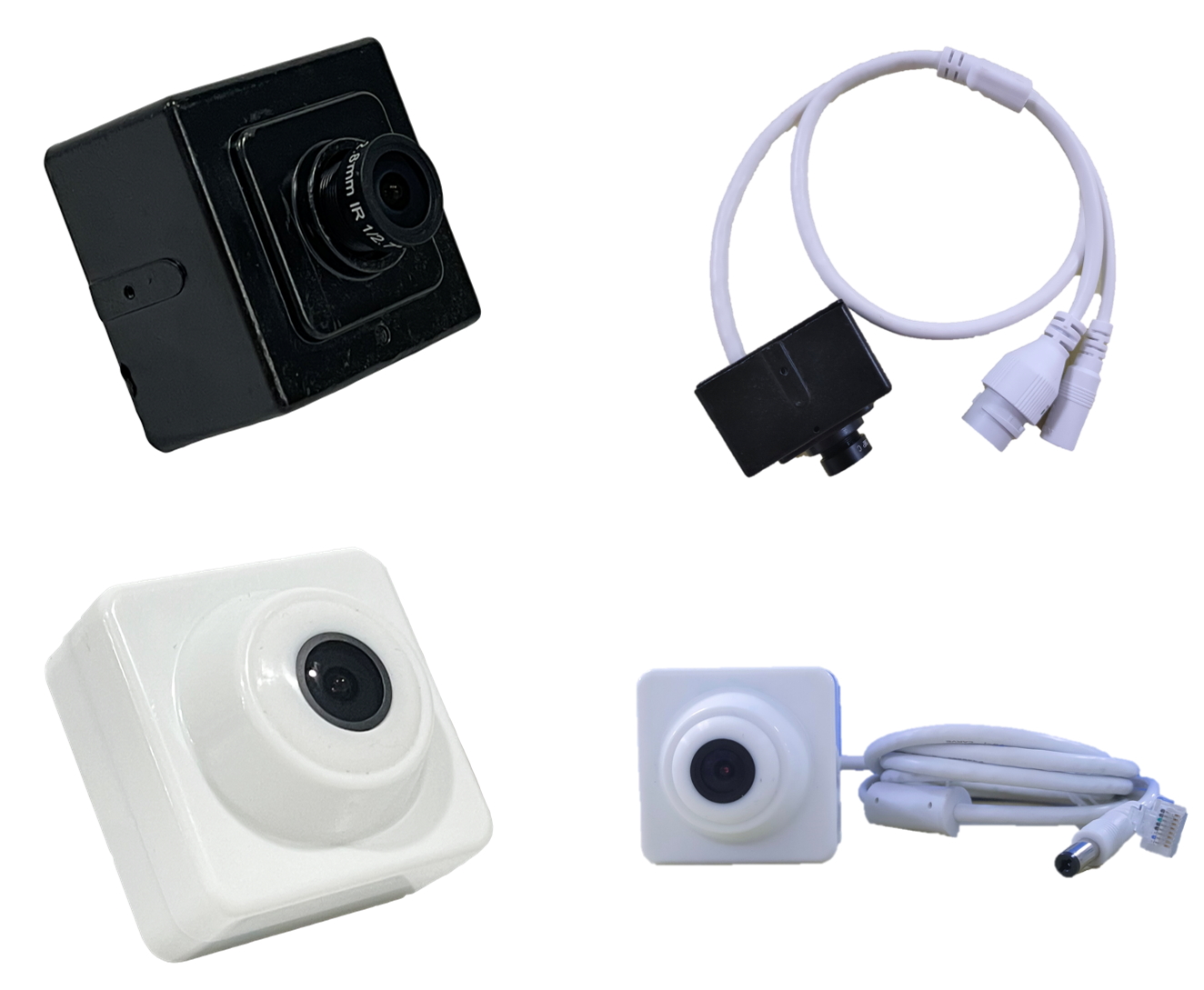
The unmanned retail cabinet dedicated camera series products of Jushi Technology have the highlights and advantages listed in the table below:
Characteristics | Characterization |
Self developed occlusion detection algorithm, immediate alarm for occlusion behavior | Implemented through image sensors on the camera and deep learning technology based on neural networks: When someone attempts to approach the camera with their hands or other obstructions, the camera immediately uploads the obstruction signal to the vending cabinet SaaS backend, which can then link with the vending cabinet system for abnormal alarm processing |
Self developed door opening and closing detection algorithm, not afraid of door lock abnormalities | A deep learning algorithm based on neural networks, using visual AI algorithms to automatically recognize whether the container door is open and avoid physical signal errors that may cause cargo damage events, thus achieving dual protection of the accuracy of container door opening and closing |
RTSP streaming reconnection technology: no loss of video data, no screen distortion during video playback | We have specifically developed RTSP streaming reconnection technology based on the RTSP protocol, which allows IP cameras to cache their videos for 2 to 3 seconds during transmission. After the network link is restored, the video can be uploaded again. This way, the backend can obtain the complete video without any order processing abnormalities caused by missing video clips |
Quick access to SDK: 1 day access, 1 week shipping, easy to handle IP cameras | Provide a stable streaming SDK and reduce the low probability screen flickering problem that commonly exists in cameras and is difficult to completely avoid through the underlying buffer processing mechanism; This SDK is suitable for Android 7.0 and above systems, and provides a demo and demo source code of the SDK to facilitate customers to quickly connect the camera streaming end. It also provides interfaces for online upgrading, online modification of resolution and bitrate, etc |
Patent ISP technology | Adopting self-developed patented ISP image optimization algorithm and 3D noise reduction algorithm, it can quickly adapt to changes in lighting, with high clarity, low noise, and stable image |
AI recognition optimization for container sales scenarios | For the vending cabinet scenario, high-definition sensors and deeply optimized ISP algorithms are used to improve imaging problems such as large differences in foreground and background light, product packaging reflections, and stray light during outdoor use. At the same time, targeted optimization is carried out for issues such as product ghosting and rapid changes in light when opening and closing doors |
H. 264 encoding | Supports H.264 image encoding. Under the same image quality conditions, the compression ratio of H.264 is more than twice that of MPEG-2. At the same time, it has higher image quality, stronger fault tolerance, and better network adaptability |
4G transmission optimization | Optimized encoding efficiency and improved 4G transmission adaptability for unmanned shipping containers in 4G transmission scenarios |
Customized solution for low-temperature freezer scenarios | Customized large angle high-temperature resistant lens, unique lens anti fog treatment, specially designed lens structure, proprietary defogging algorithm and temperature control, IP65 waterproof sealing design, sensor structure error less than 0.01mm, all of these measures work together to ensure the applicability of the product under low temperature conditions in the freezer and improve product reliability |
Easy for after-sales maintenance | Support remote upgrade and camera restart (OTA function needs to be guaranteed by the system when the camera is paired with the system) |
(2) Embedded System 4G Camera Industrial Control Computer: Industry Exclusive Innovative Product
Most IoT industry practitioners have the impression that open-source Android systems have high system redundancy, low integration, and are difficult to reduce costs. Why is this happening? Because the Android system, as an open-source system widely used in various sub sectors of the Internet of Things, can only achieve economies of scale by meeting the needs of various industries while pursuing standardization, it can only be a system with large and comprehensive performance, high system performance overhead, numerous system modules, and high system redundancy. This inevitably leads to high costs that are difficult to reduce.
Generally speaking, the fewer components, simpler the composition, and lower the coupling degree of an intelligent system, the better its stability and reliability, and the higher its cost-effectiveness. Therefore, in 7 * 24 industrial application scenarios, embedded systems are superior to Android open source systems.
Universal Android system | Embedded dedicated system |
The functions are large, comprehensive, and diverse, with relatively independent modules that cannot solve pain points end-to-end | Focus on the retail industry and solve visual pain points end-to-end |
Suitable for rough development | Refined Management |
Low integration, wide supply chain, and difficult cost control | High integration, narrow supply chain, and low supply risk |
Discrete modules with multiple bus connections | Integrated integration, single periphery, unified interior |
Based on the above starting point, the Jushi Technology team has launched an industry exclusive innovative product for unmanned retail cabinet scenarios: an embedded system 4G camera industrial control computer.
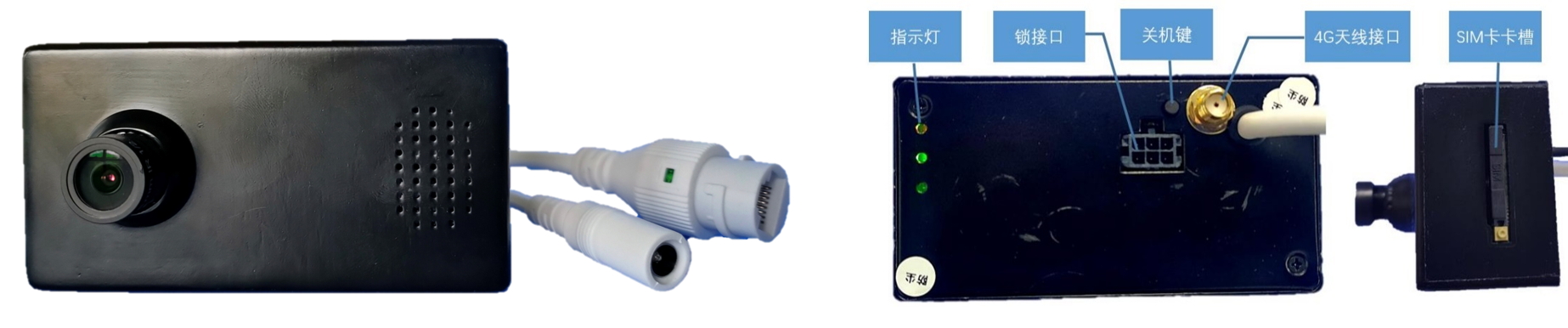
This product has the following features and advantages:
This product integrates functions such as dynamic video capture, 4G wireless communication, UPS power management, and door lock drive;
The product is highly integrated and has the advantages of small size, beautiful structure, simple operation, and easy installation. For the operation and maintenance scenarios of unmanned shipping containers, it can help solution providers quickly solve problems, reduce equipment failure points, effectively locate problems, and save operation and maintenance costs;
This product can easily, quickly, efficiently, and stably construct an unmanned intelligent cabinet solution. It only requires an external electromagnetic lock and a radial camera to complete a visual solution for a single door cabinet vending machine, which can effectively reduce the research and development costs and operation and maintenance costs of unmanned intelligent cabinets;
The main control board system is based on a deeply optimized stable version of the Linux operating system, which runs more stably and ensures more secure data;
Deeply optimize the video business of AI retail cabinets at the coding level, greatly accelerate the response speed of video data processing, and reduce bandwidth usage;
The video cloud service is quickly integrated and called by unmanned retail business application systems and product recognition algorithm systems through API interfaces, eliminating the need to pay attention to hardware details and the hassle of directly dealing with hardware.
(3) Android system industrial computer: Qualcomm chip solution with excellent 4G network performance
An Android controller developed based on Qualcomm chip platform, equipped with Android 10 system, using 4-core Cortex A53 CPU, embedded 4G module technology, switch and controller are trigger connected, network communication is more stable, suitable for unmanned retail payment cabinets, self-service cabinets, advertising machines and other application scenarios.
This product is equipped with a self-developed dynamic IP camera from Jushi, which can quickly develop a complete solution for unmanned retail cabinets. The equipment debugging is more convenient and the connection is more stable
Can be used to build a pure visual payment cabinet solution, the device supports up to 4 network cameras and 2 electromagnetic locks, and can be flexibly applied to single door and double door visual payment cabinets;
On the basis of building a pure visual payment cabinet solution, it also supports an external facial recognition payment panel, which can quickly build a set of visual facial recognition payment cabinet solutions.
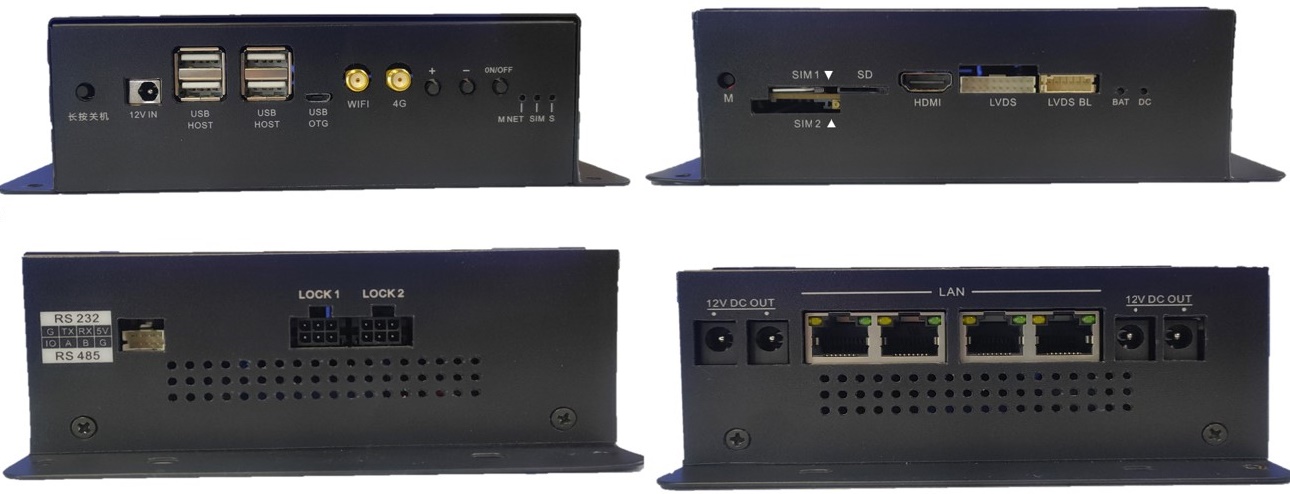
This product has the following features and advantages:
The main control software supports separate power-off control of the electromagnetic lock and online detection of the electromagnetic lock;
The main control software supports separate power-off control for 4 DC 12V power output interfaces;
Hardware reserves RS485, RS232, GPIO and other interfaces, supporting the connection of door detection sensors and temperature controllers;
Supports HDMI/LVDS maximum 1080P@60fps Display;
Rich external interfaces, 100Mbps RJ45 Ethernet port, DC12V output power interface, USB interface, RS485 and RS232 serial ports, to meet the interface expansion needs of various application scenarios;
Supports two types of SIM card slots, dual card single standby, and supports SIM card hot swapping function;
4G CAT4 wireless network;
Built in backup battery, can maintain emergency response in case of sudden power outage, and the battery supports a maximum standby time of 10 minutes.
(4) Lock control integrated camera
Industry statistics on unmanned retail visual cabinets show that a significant pain point in the visual cabinet system lies in video processing, including the use of third-party switches that pose a huge risk to data transmission compatibility. This is manifested in video loss, damaged or incomplete video recordings, and ultimately leads to the inability of backend algorithms and manual confirmation, resulting in cargo damage.
So, how can we better integrate video processing and lock control while maintaining the flexibility and scalability of the main control?
Based on the above issues, the Ju Shi Technology team has launched a lock control integrated camera for unmanned retail cabinet scenarios, which is also an exclusive innovative product in the industry.
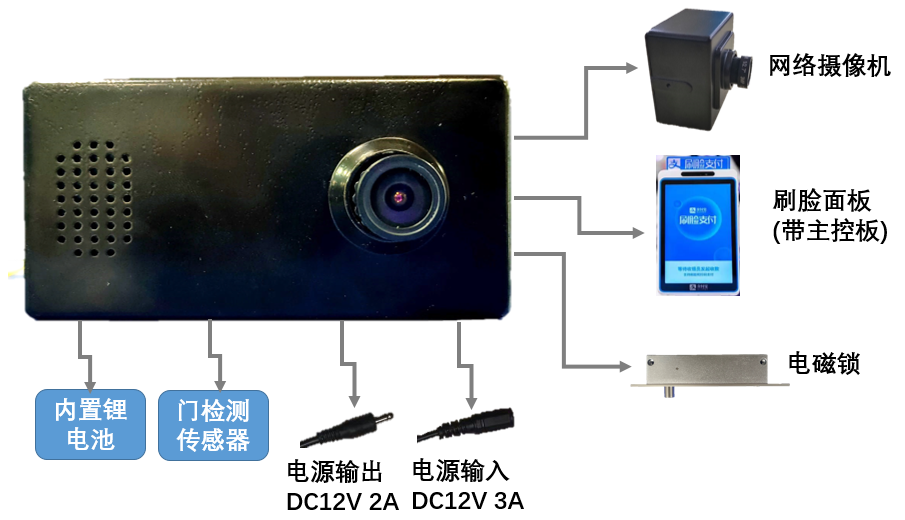
This product integrates functions such as dynamic video capture, door lock drive control, and UPS power management. When paired with a facial recognition payment panel machine or main control, it can form a complete hardware solution for unmanned intelligent sales cabinets.
Compared with traditional solutions, the lock control integrated camera machine itself integrates a single camera, has a small size, is easy to connect, and can achieve rapid docking between the camera, electromagnetic lock, and main control, greatly reducing research and development time and costs.
When building a pure visual cabinet solution, simply connect the Android controller to the lock control integrated machine. The lock control integrated machine can directly connect and control multiple cameras and electromagnetic locks, allowing for quick construction of a pure visual vending machine solution. The main controller applicable to this solution only needs to have a performance greater than or equal to RK3128, and generally meets the basic requirements for public version designs, without the need for customized controllers.
If the facial recognition payment panel comes with a main control, simply pair it with a lock control all-in-one machine to quickly build a complete set of visual and facial recognition payment unmanned vending machine solutions. At present, it has been adapted to multiple devices such as Mario face recognition panels.
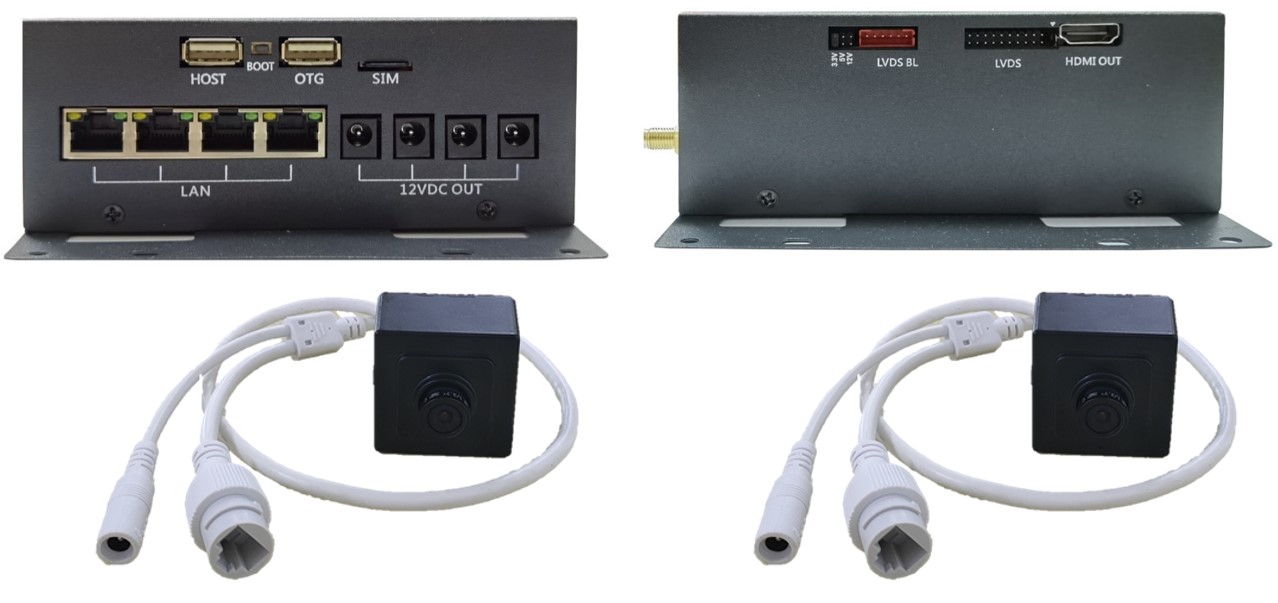
(5) Visual AIoT hardware kit solution for unmanned retail cabinets
All along, unmanned retail cabinet solution providers have purchased two important hardware components, industrial control computers and cameras, from different hardware manufacturers. In addition to spending time on integration, connectivity debugging, and testing verification at the beginning, when system problems need to be identified and located, multiple hardware manufacturers often need to work together from the hardware bottom layer between the industrial control computers and cameras to identify and solve the problems. But in reality, these hardware manufacturers often find it difficult to quickly and effectively collaborate and solve problems due to their subjective enthusiasm and objective difficulty in cooperation.
In order to solve the common and unavoidable problems mentioned above, Jushi Technology has launched a hardware kit for unmanned retail AI cabinets, including Android industrial computers or embedded 4G camera industrial computers, network cameras. The core hardware of the unmanned retail AI cabinet is pre integrated and connected in advance, allowing customers to directly use it. In case of system problems, Jushi Technology can work together with a hardware manufacturer to greatly shorten the online cycle of the unmanned retail AI cabinet solution for customers and greatly improve the efficiency of after-sales problem solving.
4、 Overview
Jushi Technology is the only company in the industry that has the research and development capabilities of visual AIoT intelligent hardware products, embedded industrial computers, Android system industrial computers, and visual AI algorithm software, and focuses on the retail sub industry for deep cultivation and continuous development.
Jushi Technology possesses full stack visual AIoT technology capabilities, including ISP image processing, video encoding and decoding processing, video edge cloud collaborative computing, visual AI algorithms, cross platform software and hardware research and development, and parallel computing optimization.
Therefore, Jushi Technology is confident in establishing initial experience advantages and differentiated competitive barriers in the retail and other segmented industries that the company focuses on, and firmly establishing a foothold and long-term cultivation, empowering segmented industries and helping customers succeed, thus becoming the "hidden champion" and top player in the visual AIoT industry!

Focus on digital image technology and embedded
AI research and development
Company Address:Room 605, Block A, Huaxing Venture Park, No. 500 Jucai Road, Binjiang District, Hangzhou, Zhejiang Province
Contacts:
Strategic Cooperation:Mr. Liang 181 5813 5369 (WeChat same number)
Product Consultation:Mr. Du 187 5885 7866 (WeChat same number)
Device Supply:Ms. Liao 133 5571 9976 (same WeChat number)

WeChat Official Account

Strategic Cooperation

Product Consultation