
Company News
As an important direction for the development of unmanned retail, visual recognition based unmanned retail cabinets have attracted more and more upstream and downstream enterprises to participate in product development, solution improvement, and manufacturing processes.
As the core component of visual recognition unmanned retail cabinets, cameras are highly valued for their image effects, compatibility, stability, reliability, and cost. Currently, they are mainly divided into two categories: USB cameras and IP network cameras. Their compatibility, stability, and reliability are closely related to hardware connections and software transmission methods.
The advantages of USB cameras are that they are easy to watch videos, convenient and fast for streaming, and there are many options for USB cameras at different price points on the market.
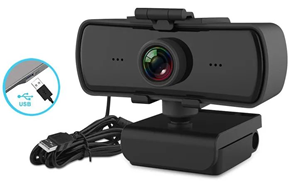
The advantages of IP cameras are stable connection, no compatibility issues, no reliability issues, convenient and fast application layer development, and the ability to achieve essential business functions such as multi-channel expansion and OSD overlay.
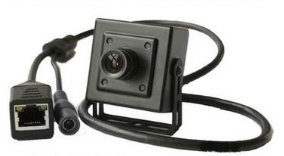
The author takes the advantages and disadvantages of USB and IP transmission methods as the starting point to analyze the key factors in camera selection.
Firstly, there are differences in image and encoding requirements for ordinary USB cameras used in security monitoring, industrial vision, military, aerospace and other scenarios. Some manufacturers often refer to specialized video conferencing products when selecting, so we also include specialized video conferencing solutions for comparison. The analysis and comparison are detailed in the table below:
| project | MJPEG USB Solution | H264/H265 IP/USB scheme | 4K HD Video Conference Solution IP/USB 3.0 |
| Cost | Very low | Lower | Very high |
| Coding Ability | MJPEG The simplest encoding method requires a significant reduction in frame rate for data larger than 2MP, otherwise it cannot be transmitted through USB 2.0 | MJPEG/H264/H265 H264.265Converted to a million pixel high-definition video encoding design, significantly improving encoding efficiency, reducing stream data volume, and saving upload bandwidth | Mainly H265. H265 is designed for encoding 4K high-definition videos with a resolution of 5 million pixels and higher, significantly improving encoding efficiency and reducing the amount of stream data, saving upload bandwidth. Please note that H265 decoding relies on a dedicated decoder |
| Image ISP | Simple 2A, AWB, Sharpeness, saturation processing. The algorithm itself is hardware fixed and cannot be adjusted. Suitable for ordinary USB cam scenarios at home | 3A、AWB、 Multi level sharpening, saturation processing, WDR, HDR, 3DNR wide dynamic, 3D noise reduction, and more. Several algorithm modules can support secondary programming and are specifically designed for industry applications | 3A,AWB, Multi level sharpening, saturation processing, WDR.HDR, 3DNR wide dynamic, 3D noise reduction, several algorithm modules that can support secondary programming, specifically designed for industry applications |
Therefore, in the cost sensitive unmanned retail cabinet industry, cameras for dedicated video conferencing solutions cannot be selected due to their high cost. A relatively cost-effective option is an IP camera with high-definition H264 encoding. Especially as visual AI algorithms increasingly replace manual labor in this field, the requirements for images are also increasing.
Secondly, from the perspective of image data transmission, the maturity of IP cameras using standard ONVIF protocol or private network protocol is much higher than that of the vast majority of USB cameras using UVC protocol. The analysis and comparison are detailed in the table below:
| project | USB interface transmission | IP network interface transmission |
| Hardware connection stability and reliability | The USB interface has strong versatility and is plug and play. But USB-A, USB 4-pin terminal USB There are many interfaces such as 5pin terminals, and USB interfaces were originally designed for consumer PC computer application scenarios, without considering the complex scenarios of industrial applications. The anti vibration interference ability is poor, and actual industrial applications need to consider aviation sockets, snap on designs, etc. to improve the stability and reliability of connection operation | Standard Ethernet RJ45 interface, industry standard. Adopting an integral locking mechanism, the connection is firm and reliable. Can avoid attenuation, near end crosstalk, insertion loss, return loss, and far end crosstalk, etc |
| Hardware compatibility | The motherboard USB port standard has inconsistent impedance; Replacing the motherboard requires adaptation with the camera | Standard Ethernet port design, unified hardware |
| Software compatibility | The USB transfer protocol focuses more on the driver layer. Many Android controllers will modify image parameters at the driver layer without authorization, causing images that have already been debugged on the PC to change | The compatibility of the underlying TCP and UDP protocols is complete, and parameter modification is done at the application layer, which is controllable |
| power supply | USB interface power supply, there may be hidden dangers in motherboard and HUB power supply | Standard DC 12V independent power supply, stable |
| Android system security | Most USB solutions require an Android board root, which poses a security risk to the system | Communication with Android motherboard through application layer, no need for root |
| Upper level protocol development | The UVC protocol is mainly used to transmit video streams, and the application layer development does not fully support this protocol. Multi channel capture: Due to bandwidth limitations on the USB host, multiple USB cameras cannot run or capture images slowly or timeout when connected. Secondary development of video streams: The mainstream supported formats for USB cameras are MJPG/YUY2 format, and H.264 is not supported. The mainstream USB camera requires the open source library UVC Camera for Android access, but obtaining MJPG video streams is too large and requires decoding and encoding into H264 format, which wastes Android resources. Additionally, some encoding parameters at the bottom of Android are not open, which can cause H264 encoding files to be too large; The open source library uvcCamera itself has complex code and requires users to have open capabilities such as C/C++, Android JNI, Java, etc. to make changes. | The development of network application layer protocols is relatively convenient and fast. And it does not require customers to understand ONVIF, RTSP protocols, etc. It can be integrated in SDK form and does not require much user development; Multi channel capture: It can implement multi channel capture services at the application layer and can also be extended to multiple channels. Secondary development of video streams: IP cameras generally support H.264 format, making application layer development more convenient |
| Widely applicable | USB is mostly used in consumer scenarios, with less video transmission in industrial applications. There are not many application examples of USB camera solution with multi-channel access, and it is difficult to control the stability of accessing more than 4 channels | The ICT industry for communication and security is widely used and has mature industrial applications. Minimize the access issues caused by hardware factors to customers as much as possible, and users only need to use any controller with a wired network to access. From an industrial application perspective, the network multi access solution is relatively mature |
From this, it can be seen that for unmanned retail cabinets operating at 7 * 24H with relatively stricter requirements than defense, high stability means lower cargo damage and maintenance costs. After calculating this account, IP cameras are much more cost-effective.
In summary, the cost-effectiveness of IP cameras is relatively the highest in visual recognition unmanned retail cabinets.
In the early days, some manufacturers mainly used MJPEG encoded USB cameras. Later, the industry's major operator X Bao gradually shifted to IP H264 encoded camera solutions. Nowadays, the larger the shipment volume of manufacturers in the industry, the more they focus on underlying technology and use IP cameras for product updates and iterations, thus promoting the continuous development of unmanned retail cabinet industry technology.

Focus on digital image technology and embedded
AI research and development
Company Address:Room 605, Block A, Huaxing Venture Park, No. 500 Jucai Road, Binjiang District, Hangzhou, Zhejiang Province
Contacts:
Strategic Cooperation:Mr. Liang 181 5813 5369 (WeChat same number)
Product Consultation:Mr. Du 187 5885 7866 (WeChat same number)
Device Supply:Ms. Liao 133 5571 9976 (same WeChat number)

WeChat Official Account

Strategic Cooperation

Product Consultation